Hard Tech Startups funded by Y Combinator (YC) 2026
November 2026
Browse 142 of the top Hard Tech startups funded by Y Combinator.
We also have a Startup Directory where you can search through over 5,000 companies.
 DualizerActive • 3 employees • San FranciscoF2026Dualizer builds AI-powered, physics-based process simulation and digital twins to design and scale chemical processes and optimize existing plants. We help engineering teams identify bottlenecks, increase yield and throughput, and reduce energy and production costs—improving plant efficiency and profitability. The platform combines AI reasoning, our proprietary deterministic simulation and optimization engine, and physics-informed machine learning. Engineers can build, calibrate, and refine models through conversation, starting from a diagram, available data, or an engineering objective. Calculations account for thermodynamics, material and energy balances, equipment behavior, and operating constraints, enabling teams to optimize interconnected equipment and operating conditions across a plant. Equipment sizing and costing, 3D layout planning, and techno-economic analysis connect process improvements to plant-level decisions. Teams can accelerate new process scale-up, debottleneck operating plants, and continually refine operating strategies as production targets and plant conditions change. Dualizer makes rigorous simulation and optimization an ongoing capability for improving industrial productivity and profitability throughout a plant’s life.manufacturingsaashard-techenterprise-softwaremachine-learning
 Vibe RoboticsActive • 4 employees • San FranciscoW2027Vibe Robotics builds robots for the work nobody should have to repeat. We’re starting in hotels. Every day, housekeeping teams move linens between floors, restock carts, and fold stacks of laundry before the next guests arrive. It’s physical work that has to get done every shift. Our first robot, Vibe 01, folds a hand towel fully autonomously in 23.8 seconds. It learned from just a few hundred human demonstrations. We’re piloting Vibe 01 at a Hilton property and working with hotels under the Marriott, Hilton, and IHG brands to bring it to more locations. Folding is the first job. Next are restocking housekeeping carts and moving linens between floors. We’re Archer, Daniel, Katherine, and Pranav, and we’re building robots that can learn to do routine physical work across industries.roboticsaihard-tech
 CaladhActive • BostonF2026Caladh protects critical maritime infrastructure from drone attacks above and below the waterline. Our systems detect, track, and defeat unmanned systems so they can't get near the assets they want to disrupt.maritimedefensedroneshard-techhardware
 Liquid EnergyActive • 5 employees • Waterloo, ON, CanadaF2026Liquid Energy delivers the most scalable and cost effective inference. Our compute is hosted in our proprietary data center modules that we call NanoDC - the Nano Data Center. NanoDC is engineered to be rapidly deployable and scalable without traditional bottlenecks like power, permitting, and supply chains. Using NanoDC, Liquid Energy is able to provide the most efficient and sustainable way to scale compute to meet global AI demand. We have 20 units and have spent the last year in building the supply chain and manufacturing, because of that we have an ability to manufacture 2 MW/month. Over the next year we will scale that up to 20MW per month.energyaihard-techsolar-power
 Rodeo RoboticsActive • 2 employees • San FranciscoF2026Rodeo Robotics (YC F26) automates vehicle maintenance so shops can get vehicles back to work at lower cost. Co-founders Michael Hazard and Colby Duke met at Applied Intuition, where they helped OEMs like Toyota and General Motors deploy autonomy in the real world and saw firsthand how much hands-on work it takes to keep fleets running. They’re now applying their experience to the $600B US maintenance market. The average vehicle is getting older and needs more maintenance, but shops struggle to recruit new technicians to replace experienced workers as they retire. This leaves shops turning away work and customers waiting longer for service. Rodeo builds robots that inspect vehicles, diagnose problems, and perform services, starting with routine maintenance like oil and tire changes. Their robots use AI models specialized for multi-step vehicle maintenance tasks and operate autonomously for 96% of execution time on their initial tasks.roboticshard-techautomotiveai
 Theseus RoboticsActive • 7 employees • Zurich, SwitzerlandF2026Theseus Robotics creates the OS & Physical AI to deploys humanoids to automate menial tasks in supermarkets. During the day, our robotics pick orders for e-grocery orders. Overnight, they restocks shelves with goods from the back warehouse.roboticsretail-techhard-tech
 SaccadeActive • 2 employees • San FranciscoF2026Alzheimer's testing today is bottlenecked around the onset of symptoms, when the damage is already done. Current treatments, including the FDA-approved drugs released in 2024, don't reverse the disease; they only slow it down. Earlier detection means earlier intervention. Eye movement changes linked to Alzheimer's surface sooner than any other biomarker, up to 15 years before symptoms appear. We deliver a 15-minute VR assessment delivered to patients in longevity clinics: • Tasks: patients perform visual tasks designed by neurologists to trigger a distinct oculomotor response in people with Alzheimer's or on its path • Hardware: our patent-pending attachment connects to any VR headset on the market and captures these eye movement patterns. • Analysis: the patterns are compared against our ML model to produce a risk analysis. Once classified, patients can access new interventions, such as the FDA-approved drugs. They're also referred to longevity practices, neurology practices or both, depending on their stage of decline. Testing for the earliest biomarkers allows the earliest possible intervention. In some cases, that slows the disease enough that patients outlive the onset of symptoms and never face memory loss in their lifetime.healthcarehardwaremachine-learninghard-techb2b
 HundredActive • 3 employees • San FranciscoF2026Hundred is an automated inspection system for the components that make up devices like phones, smartwatches, and laptops. Hundred helps factories cut waste and prevent line-down issues by catching sub-100µm visual defects before parts reach the assembly line. Designs change so fast that traditional machine vision can't keep up, forcing factories to rely on manual inspection, literally people checking parts under microscopes to sort out bad parts. Human inspectors miss roughly 15% of defects, and a single bad part can turn a finished device into scrap. Hundred is replacing manual inspection with an imaging rig that scans an entire shipping tray of parts at once. The Hundred rig blocks ambient light and uses varied controlled lighting configurations to detect defects smaller than 100µm on a range of materials. The controlled environment means Hundred only needs to scan a single good part before it can find defects, categorize them, and assess their severity accurately. Defects cost U.S. discrete manufacturers $45 billion a year, a problem Hundred's CEO, Erica, saw firsthand as a mechanical engineer designing devices at Meta, Google, and Magic Leap. She met Imani, Hundred's CPO, at Columbia University's admitted-students day in 2017 and Imani went on to spend five years at Twitch building software that handles billions of requests a day. Erica later met Iris, Hundred's CTO, in the Bay Area. Iris worked as a quant at Citadel before pivoting to study at Imperial College London where she researched machine learning on 3D meshes and other structured data. Together, they're building Hundred because manual inspection shouldn't still exist in 2026.machine-learninghard-techhardwarecomputer-visionindustrial
 HABUActive • 2 employees • Phoenix, AZ, USAF2026HABU is an AI-native real estate development firm that helps real estate investors deploy capital to build housing faster, at lower cost, and with higher yield. We're building an internal AI-native operating system that completes 90%+ of development tasks at 95% faster processing speeds while delivering the same outcomes customers expect externally: high yield, low risk projects. We're selling the outcome, not the inputs to the outcome. Developers are service providers for white-collar investors: they find land, construct buildings, and operate and sell them for a profit. Our customers don't care how the projects are sourced or managed, only that they are completed on time and produce the forecasted returns. We use agentic workflows, geospatial analysis and mapping, and development-specific workflow automation to manage the end-to-end process. The result is 5x more projects per FTE compared to a non-AI developer, 20% faster project schedules, and 10-15% lower total project costs. We're *not* long term property owners, strictly the service provider (fee/merchant developer). $160B was deployed into multifamily in 2025 and $534B into commercial real estate overall. Developers naturally have high operating margins and we are building to be the most operationally and capital efficient developer in the country. Starting first with multifamily in Phoenix and then expanding nationally.hard-techreal-estatehousing
 Open ActuationActive • 2 employees • Los AngelesF2026We design and manufacture high-mix drone motors and robotic actuators in LA. DJI, Apple, and Ford don't settle for OTS components. Likewise, the teams that win the Western robotics market will build seamless machines from tightly integrated software and hardware. Open Actuation designs motors and actuators around your robot's unique form factor and mission - then we rapidly bring them to life with proprietary software and tooling geared for high-mix machining and assembly. We've designed and built motors for top drone OEMs and can assemble thousands of motors per month at our first factory in LA. We're doing for motion components what 3D printing has done for structural components. This enables hardware teams to build and iterate at the speed of software so they can create elegant, reliable, ROI-positive robots and win massive markets.roboticsmanufacturingelectronicshard-techdrones
 AsimActive • 4 employees • San FranciscoF2026Asim is building standardized benchmarks for physical intelligence, helping robotics companies understand their robots’ capabilities and safety limits before deployment. We test real robots under changing physical conditions, varying shape, weight, friction and material, to identify where performance breaks down and give engineers actionable feedback. Our four founders include three PhD researchers, two specializing in robotics, with backgrounds at Sony and NASA JPL and two RoboCup@Home championship wins. Our ambition is to become the standard robotics teams use to measure progress and assess readiness for deployment.deep-learningrobotic-process-automationroboticshardwarehard-tech
 Viraj AeroActiveF2026Viraj Aero builds gas turbines that deliver both power and cooling water for data centers. It needs no grid connection and no water pipeline. Burning natural gas already produces water. Our patented system captures that water from the exhaust. Part of it cools the data center. The rest is turned into steam and injected back into the turbine. That gives up to 40% more power from the same fuel (cheaper compute) and cuts NOx emissions by up to 99%, which cuts permit approvals from years to weeks. We're building a genset around our first-of-its-kind gas turbine. It fits in a 10-foot container and runs anywhere, even in the desert. That matters because two-thirds of new data centers are being built in water-stressed regions. We first built this steam-injected turbine for aircraft, where carrying water tanks isn't an option and efficiency is critical. We're currently integrating our full-scale prototype into an aircraft. The team comes from GE, Rolls-Royce and Formula 1, and we're already working with Safran, one of the world's largest aircraft engine manufacturers.hard-techaerospaceaienergy
 Inflection Space SystemsActive • Los AngelesF2026Inflection is building the industrial capacity to manufacture tens of thousands of spacecraft per year for next generation commercial and government space applications. Imagine a factory that looks like an Amazon fulfillment center instead of a NASA clean room.satellitesmanufacturingdefensehard-techhardware
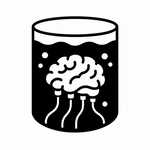 Frontier ComputingActive • 3 employees • LondonS2026Frontier is first to grow biological brains at scale, serving biological neural nets with substrate-level colocation of memory and compute, enabling highly cost effective training of large parameter count models. While academia has traditionally been limited to ~1M neurons in vitro, Frontier has built a pathway to scale to 100M+ neurons by circumventing traditional scaling challenges in biological culture, demonstrating this strategy's functionality by training a biological brain using this scaling primitive to play Frogger. Frontier is now growing exascale compute clusters to produce substrates capable of long-horizon language reasoning while operating at much higher sample efficiencies than traditional architectures, and collocating memory with compute to enable significantly larger parameter counts than would be tractable for training within traditional compute clusters.hard-techhardwareai
 The Subvocal CompanyActive • 3 employees • San FranciscoF2026The Subvocal Company builds glasses that use radio-frequency sensing to turn silently mouthed words into text, replacing voice AI and keyboards as the next interface between humans and AI. Our launch on X reached 12M+ impressions and we've collected >$150k in preorder deposits from customers.consumerhardwarehard-tech
 Ethos Space ResourcesActive • 2 employees • Los AngelesS2026Ethos makes silicon on the Moon to power terawatt scale data centers. The Moon's surface is 21% silicon. We melt and electrolyze the lunar surface to make raw materials for solar panels. With solar panels made from the Moon, the constraint that limits data center scaling and everything else in space is gone.aerospaceenergyexascale-computinghard-techindustrial
 EdgerunActive • 12 employees • San FranciscoS2026Edgerun builds military exoskeletons. Read the mission at edgerun.com/missiondefenseroboticshard-techhardware
 antimattrActive • 2 employees • San FranciscoF2026antimattr is building the hardware interface for human–agent interaction: an AI wearable system made up of a smart ring and voice-isolating earbuds. Voice is the fastest way to instruct an AI agent, but most people won’t use it in public because it’s noisy and unreliable. We think voice AI adoption is held back by hardware, not by model quality. The earbuds use our proprietary voice isolation to capture your voice clearly anywhere, whether that’s a loud pub, a factory floor or a busy street. That means clear calls and dictation/transcription you can trust. The ring is a discreet way to control your agents. Tap to capture a thought, trigger a workflow, or record/summarise a conversation into a searchable personal memory.ai-assistanthard-techhardwareconsumerai
 Aerogen SystemsActive • 4 employees • Ann Arbor, MI, USAS2026We are building the future of chip manufacturing. Chips are more advanced than ever, and the features inside them keep getting smaller. But the cleanroom infrastructure supporting their manufacture has not scaled at the same pace. Intel, TSMC, Samsung, and others spend billions building and operating massive cleanrooms, only to isolate their most advanced wafers from the surrounding facility as much as possible. We think that architecture is backwards. Instead of making the entire building cleaner, why not make the machinery itself as clean as possible? Talos is our proprietary tool-integrated purification system. It sits directly inside semiconductor equipment and continuously destroys airborne molecular contaminants before they reach the wafer. Instead of fighting contamination by constantly flooding tools with ultra-high-purity nitrogen, Talos keeps the environment inside the machine 10–100x cleaner, without the massive purge-gas bill. Talos is powerful on its own, but it is also the foundation for a much bigger vision: the Cleanpipe. The Aerogen Systems Cleanpipe is an ultra-clean interconnect infrastructure that protects wafers as they move from machine to machine across the fab. Rather than relying on a billion-dollar cleanroom to protect every cubic foot of factory space, Cleanpipe creates a controlled environment only where cleanliness actually matters: around the wafer. Talos cleans the tools. Cleanpipe connects them. Eventually, we delete the cleanroom and build more advanced chips, at greater scale, with radically less infrastructure. With cleanpipes connecting tools, chip fabs can exist anywhere.semiconductorsb2bhard-techmanufacturing
 Vernius Systems, Inc.Active • 3 employees • San FranciscoS2026We make mass-deployable radars for unmanned systems. Our first product is Archimedes, a radar seeker that finds and locks onto targets, enabling autonomous intercept on any drone. We have over $580M in LOIs for Archimedes, across some of the largest defense primes in Ukraine, the EU, and the Middle East. Seekers are the most critical and costly component in every autonomous interceptor. Developing a radar seeker takes a 200+ person team at Raytheon and hundreds of millions of dollars. Archimedes is 100x cheaper than existing radar seekers on the market - and is the first product to make it feasible to deploy radars on every drone.hard-techdronesradardefenseaerospace
 Mass MagneticsActive • 3 employees • BostonS2026Mass Magnetics turns recycled rare-earth scrap into high-performance permanent magnets, made in America. The materials we supply are the backbone of electric motors, sensors, speakers, hard drives, and electronics. Our process enables DFARS-compliant magnets for defense, aerospace, and industrial manufacturers who demand domestic supply without compromising on quality. Operations in Greater Boston, MA (Greentown Labs) and Columbus, IN.roboticsdefensehard-techdronesmanufacturing
 MeteoricActive • 2 employees • San FranciscoS2026Meteoric is building drones that clear clouds over solar farms and ultimately weaken severe storms and hurricanes.hard-techclimatetechrenewable-energy
 Dipole LabsActive0 • BostonS2026aihard-techsemiconductors
 HemlockActive • 1 employees • San FranciscoF2026At Hemlock, we equip workers around the globe with EMG wearables to generate force/contact-annotated egocentric video data to give physical AI models a sense of touch from human data. Force + contact dynamics, collected at scale.hardwarehard-techrobotics
 Moving AtomsActive • 2 employees • San FranciscoS2026Our first model, Atom 1, pre-trained on the internets video, and fine tuned for physics. It has been action conditioned, so you can simulate robot actions within it. This lets Robot Labs train their robots using GPUs instead of relying on human collected manual data that is slow and expensive. In unseen and hard to replicate environments, this is the only path to getting ANY training data.data-labelingroboticsvirtual-realityhard-techai
 twentyfour26Active • 2 employees • San FranciscoF2026At twentyfour26, we are developing standardized manufacturing cells that bring machines, tooling, workholding, and inspection under a single system. Our models are being developed to interpret CAD designs, plan machining strategies, select tooling and setups, and operate the machines. We're already manufacturing components for hardware companies in and around the Bay Area, with turnaround times as fast as ~48 hours. Operating our own machines allows us to develop and deploy automation against real production workloads. Our goal is to make manufacturing 100 different designs as easy as manufacturing 100 units of the same design. From individual components to complete assemblies, we want to abstract the entire manufacturing infrastructure into an API.manufacturingindustrialhardwarehard-techai
 VoreliosActive • 2 employees • San FranciscoF2026Vorelios is a research lab developing AI that understands physics and engineers autonomously, from an objective to the system that achieves it. We want to turn humanity's greatest ambitions into tractable engineering problems, accelerate the technologies that transform civilization, and discover the ones no one has imagined yet.aihard-tech
 NeuromorphicActive • 3 employees • San FranciscoS2026We are building robots that can work autonomously in existing wet labs. Unlike traditional lab automation, which requires dedicated equipment and fixed workflows, our robot moves between workstations, manipulates existing scientific equipment, transports lab materials, and executes experiments using the same lab infrastructure as a human technician. We make the robots easy to manage through natural interfaces like Slack, email, and phone. Our goal is to make deploying robots in wet labs as easy as onboarding a new employee, and to accelerate scientific research!roboticsaibiotechhard-techb2b
 UltrasoniumActive • 5 employees • BostonS2026The technologies that define this century, including data centers, rockets, satellites, and robots, are built from complex metal parts. As these systems advance, the parts get harder to make. Past a certain complexity, casting and machining stop working, and the advanced methods that remain are slow, expensive, and hazardous. Ultrasonium has invented a new manufacturing method to make these critical parts 15x faster and 75% cheaper than the methods they replace, in the U.S. and at scale. Solid metal feedstock goes in and a finished part safely comes out, controlled by a physical AI layer and novel control processes. The systems that matter most, in aerospace, energy, and compute, are demanding metal geometries that can't be machined or cast and are too expensive and slow to make with incumbent methods, at a moment when domestic manufacturing capacity is a national priority. Our founding team has built and innovated some of the most complex engineering systems known to man: quantum computers, superconductors, nuclear reactors, and novel aerospace alloy processing methods.hard-techmanufacturinghardwarerobotics
 Ekho LabsActive0 • New York CityS2026Ekho predicts the wars, strikes and tariffs that break global shipping, and tells freight teams which shipments are exposed and what to do about them. Predicting escalation is what our team did for eight years before this - now we bring the same engine to logistics.enterprise-softwarehard-techsupply-chainaisaas
 Applied Electrodynamics, Inc.Active • 5 employees • San FranciscoS2026Applied Electrodynamics builds imaging systems that see through solid matter. Our team previously co-invented the iPhone touchscreen and Nest learning thermostat. We’re starting in construction, helping teams map structural elements and utilities inside walls and ceilings. The same platform extends to security screening and cargo inspection. Our mission is to make the hidden physical world machine-readable across the entire electromagnetic spectrum.constructionhard-techdefensemanufacturinghardware
 Synapse SemiconductorActive • 2 employees • Durham, NC, USAS2026We want to push machines to where humans cant go. Presidential early career award winning Duke Semiconductor ECE Faculty Tania Roy and Sanjeev Chauhan are building a frontier semiconductor research lab. Their focus is on solving physical AI challenges from the semiconductor device level and building products around the moat of impossible to copy innovation. Their first work is on a new vision sensor that can run neural network filters right in the camera pixels and only collect data that machines care about. As physical AI develops, machines needs to understand the world around them if they aim to interact with them.roboticsdefenseedge-computing-semiconductorshard-techai
 AtomarineActive • 2 employees • San FranciscoS2026We are building nuclear power delivery ships to power our floating compute barges at sea. Our systems are fully standalone, have better cooling, and avoid all the resource competition that leads to local community opposition. Our centralized manufacturing allows us to deploy anywhere on Earth, four times faster than on land.hard-techenergy
 DaqstraActive • 3 employees • San FranciscoS2026Daqstra is the AI-native orchestration layer for physical R&D. It saves engineers in Aerospace, Energy and Robotics hundreds of man hours managing test infrastructure by connecting fragmented test hardware, bringing live and historical test data into one place, and by giving engineers an API to orchestrate their entire test setup. We enable teams to spend less time rebuilding test infrastructure and more time improving the hardware they test.hard-techai
 SubVysionActive • 2 employees • San FranciscoS2026We build centimeter-accurate 3D maps of underground utilities to help construction contractors dig safer and faster. With underground intelligence, contractors can avoid dangerous utility strikes and costly project delays.constructioninfrastructurereal-estatecomputer-visionhard-tech
 Libra RoboticsActive • 2 employees • San FranciscoF2026Infrastructure faces rapid expansion and labor shortages. Today, robots struggle to scale to meet customers’ high-mix work needs. Libra builds AI that engineers robots for new tasks across embodiments. We go from each new infra task to field-deployable robots 10x faster. Today, our robots are working on solar farms and piloting in data centers. Contractors pay for completed work as a service, not robots.energyconstructionroboticshard-techai
 Rise ReformingActive • 5 employees • Chicago, IL, USAS2026Geopolitical conflicts and natural disasters frequently expose the vulnerability of the American chemical industry. The reason? Production is centralized and fossil fuel-dependent. The solution? Localized production using an undervalued resource: biogas. The US produces enough biogas to make over $20 bn/y worth of chemicals, but 60% is wasted in low-margin applications or flared altogether. Rise Reforming is commercializing a modular process to transform this underutilized biogas on-site into cheap, supply-secure chemicals. Our beachhead market is dimethyl ether (DME), used as an aerosol propellant and a low-carbon fuel additive in propane. Our target market is methanol: an established billion $ chemical and the future of low-carbon shipping. We're doing our pilot project at a Chicagoland wastewater plant. This will be the first wastewater biogas-to-methanol demo in the Americas. We're hiring for a senior chemical process engineer. Apply here: https://www.ycombinator.com/companies/rise-reforming/jobs/wJ9Q9nv-senior-chemical-process-engineeralternative-fuelsrenewable-energyhard-techsmart-waste-managementclimatetech
 RobocurveActive • 3 employees • San FranciscoS2026Robocurve builds open-source tools and independent benchmarks to measure how well robots can do real-world jobs. Instead of relying on unverified demo videos from frontier labs, we score their models on reproducible benchmarks that anyone can trust. Today there are no well-run, standardized robotics benchmarks. Labs evaluate in-house, and no independent group has stepped in to run continuous benchmarking as a service. The result is that no one actually knows how good anyone else is, or where the real frontier sits. Good benchmarks require operating and maintaining physical hardware and real-world setups. Simulation only goes so far, since models that look strong in sim can show large performance gaps once deployed in the real world. Building real-world benchmarks means coordinating job-domain experts, evals engineering, and hands-on robotics all at once. Frontier labs are targeting general-purpose robotics by 2028, yet the field of robotics evals barely exists. Whoever builds the trusted measure of robot capability becomes the reference everyone relies on. We combine backgrounds in AI evals and robotics to build and grow this field as fast as possible. We already shipped v1 of our open-source framework, Inspect Robots, and ran our first pilot scoring a frontier model on a real robot.hardwareroboticsopen-sourcehard-techai
 83 SciencesActive • 3 employees • San FranciscoS202683 Sciences uses AI to mine discarded experimental data and drive scientific breakthroughs. Working alongside labs, we discover the materials that will power the new Industrial Revolution.hard-techadvanced-materialsai
 Cosmic RoboticsActive • 8 employees • San FranciscoS2026Our mission is to build a city on Mars. Cosmic-1, the first equipment in our fleet, is an autonomous robot capable of heavy-lift manipulation. Its been deployed on some of the largest solar farms in the US, more than doubling labor productivity across tens of thousands of panel installs. We're scaling in solar, expanding in data centers, and building lunar construction robotics under contract with NASA.aerospaceroboticsconstructionhard-tech
 NoriActive • 5 employees • San FranciscoS2026We manufacture Nori: A sub-$2000 bimanual mobile manipulator that can clean rooms, restock shelves, and fold clothes. Nori can handle basic tasks out of the box, and its software lets anyone teach Nori to automate work specific to their home or business. Nori aims to solve the robotics data bottleneck. By deploying affordable robots to customers around the world, we can gather the diverse data required to train the next generation of generalist robotic policies. Every user of Nori makes Nori smarter. Since launching 6 weeks ago we have already deployed our first robot and have over $440k+ in sales. We can bring general-purpose robotics to homes and businesses that could never afford it before. There are 132.7 million households and 8.4 million employer business locations in the U.S. At $1,688 per robot, selling just one Nori to 0.5% of them represents a $1.2B market opportunity in the U.S. alone.hard-techhardwarerobotics
 Salem Robotics IncActive • 2 employees • San FranciscoS2026Our software turns any robot we deploy into an everyday independent worker at your facility. They are able to walk sites, handle instruments, overcome obstacles, collect measurements, and generate auditable compliance records, replacing hours of mandatory manual surveys and inspections. Built by Los Alamos robotics veterans and deterministic-manipulation researchers, we started in nuclear and are already expanding to other hazardous industries.roboticshard-techindustrialdefenseenergy
 Praxis RoboticsActive • 3 employees • San FranciscoS2026Praxis captures the data physical AI is bottlenecked on: egocentric video, 3D scans, and multimodal capture from inside real industrial and residential environments. Embedded within publicly listed and unicorn-scale conglomerates, we reach 60k workers across 5 continents and 150+ environment types, supplying the real-world training data frontier labs and humanoid companies can't source anywhere else.reinforcement-learninghard-techrobotic-process-automation
 Arlo IndustriesActive • 3 employees • New York CityP2026Arlo Industries is building a network of sensors that precisely tracks stealthy drones and aerial threats better than radars. This capability does not exist yet because traditional radars are built on past war doctrines designed to protect single, centralised assets. Modern warfare, however, demands wide-area, persistent coverage that is both passive and economically scalable. By utilising a mesh architecture, Arlo Industries unlocks unprecedented asymmetric economics. The network is fundamentally built to scale: the cost of adding sensors grows linearly, but the tracking accuracy increases exponentially, delivering highly resilient, persistent coverage for a fraction of the cost of legacy systems. Deo founded Arlo Industries after spending over 6 years in the Israeli defence ecosystem, where he lived through multiple conflicts and experienced the Iron Dome and other systems in action against ICBMs and the infamous Shahed drones. Learning exactly how these defence systems could be improved after a Shahed exploded close to his apartment, he built Arlo Industries around the core philosophy that conflict should be concise & precise. The people behind Arlo1 includes a PhD in drones and autonomy and military experts. Arlo Industries has actively showcased this technology directly to Ukrainian militaries on the frontlines, as well as to operators across Europe and the USA.defensehard-techhardware
 General Aviation CompanyActive • 5 employees • New York CityP2026Remote ATC towers to solve the controller shortage and unblock the capacity constraints on our airspaceaerospaceroboticshard-techhardware
 OrnadyneActive • 4 employees • Los AngelesP2026Ornadyne builds flapping-wing drones for reconnaissance that look, fly, and sound like birds. Today’s drones are easy to detect acoustically, visually, and electronically. As counter-UAS systems improve, traditional quadcopters and fixed-wing UAS systems are becoming increasingly ineffective for close-range surveillance. Flapping-wing aircraft have existed for years, but have lacked the performance, endurance, and control required for real-world deployment. We’re changing that by engineering a high-performance, stealth-optimized system built from first principles for efficiency, autonomy, and reliable field use. The final frontier of surveillance won’t look like machines; it will look like wildlife already in the sky. Maybe birds aren't real?hard-techdefensedronesroboticsaerospace
 Degla IncActive • 2 employees • San FranciscoF2026Degla AI builds autonomy software that enables drones to understand spoken instructions, reason onboard, and adapt as the mission unfolds. Once you’ve expressed your intent, the system owns the problem. An operator can say, “Find the missing hiker wearing a red sweater.” The drone plans the mission, interprets what it sees, and adjusts its flight as new information emerges. The operator sets the objective and the aircraft handles the execution. At the core is an onboard vision-language model that interprets what the drone sees, understands the operator’s intent, and guides mission planning, execution, and adaptation. Running locally on NVIDIA Jetson, it makes mission decisions without relying on cloud inference.aerospacedronesaihard-tech
 Nine FivesActive • 3 employees • San FranciscoP2026Nine Fives produces modern radio frequency test equipment and solutions to disrupt the $130B test equipment industry. By combining modern electronics, AI ready test automation, and strategic supply chains, we’re equipping our customers to cut their time to market in half.telecommunicationsaerospacehard-tech
 DispatchActive • 4 employees • San FranciscoP2026Dispatch is building refurbishable reentry vehicles that host and return payloads for companies making ultra-high-value materials (semiconductors, biotech, and pharma) that can only be manufactured in space. Right now, these companies have no practical way to manufacture and get their products back to Earth. We solve this bottleneck. We just returned from the Mojave Desert testing our first full-scale reentry heat shield designed to protect the satellite as it returns from space at Mach 20+, built in an apartment for 100x cheaper than competitors. To test, we held it behind a rocket engine to simulate the forces of atmospheric reentry. IT WORKED! Watch here - https://youtu.be/dhlQmnIoptg To scale, we anchor permanent infrastructure in orbit - building high power Autonomous Space Stations designed from day one for "lights-out" manufacturing serviced by the reentry vehicles.hard-tech
 NdeaActive • 15 employeesW2026Ndea is building frontier AI systems that blend intuitive pattern recognition and formal reasoning into a unified architecture. # AI for Scientific Advancement Unlike all life before us, humanity's ascent is a story of ingenuity, not just biological evolution. Our progress has been driven by the curiosity to acquire knowledge, the ability to pass it on, and an intrinsic drive to innovate. We build technology which gives us leverage beyond our biology. We stand at the top of a knowledge and technology colossus that we collectively created over the past ten thousand generations. Scientific progress has helped us overcome burdens that long defined human life — famines, plagues, and widespread illiteracy. Science will continue to redefine the boundaries of the human condition. Today, the acceleration of scientific progress hinges on one factor: AI capable of independent invention and discovery. This capacity is the gateway to advancements beyond our wildest imagination. # A New Research Lab We're starting Ndea — an AI research and science lab. The name - like 'idea' with an 'n' - is inspired by the Greek concepts ennoia (intuitive understanding) and dianoia (logical reasoning), capturing our first goal to merge deep learning with program synthesis. Ndea is entirely focused on developing and operationalizing AGI to realize unprecedented scientific progress in our lifetime for the benefit of all current and future generations. Building AGI alone is a monumental undertaking, but our mission is even bigger. We're creating a factory for rapid scientific advancement — a factory capable of inventing and commercializing N ideas. From our vantage point today, we see many 'known' frontiers like self-driving vehicles, drug discovery, sustainable energy, robotics, and space exploration. While AGI will benefit all of these, the most exciting adventure lies in the 'unknown'. AGI promises discoveries and progress we cannot imagine today.deep-learninghard-techremote-workmlai
Loading more companies...